 All Yono
 Is Online Rummy Legal in India? 2026 Rules Explained
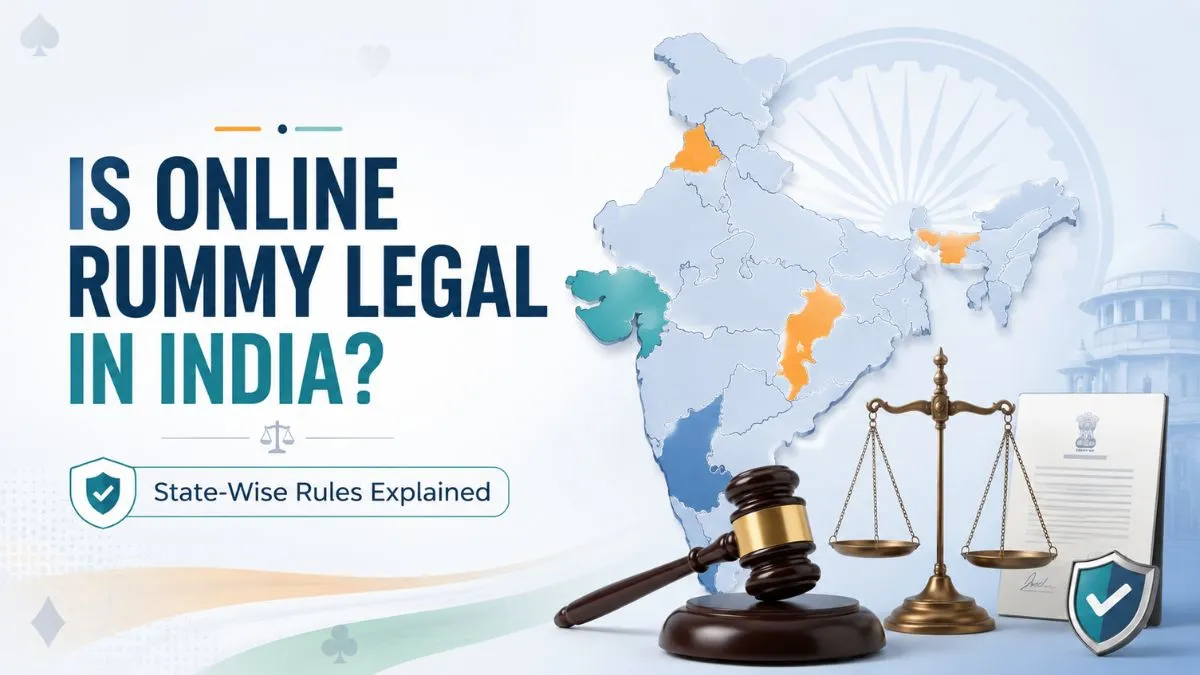
The short answer is more direct than it used to be.
As of 2026, online rummy played with money or other stakes should not be treated as permitted simply because rummy has historically been described as a skill-based card game. India now has a national framework for online gaming that focuses on whether money or another stake is involved and whether a user expects a monetary return.
That change matters.
Older articles often explain online rummy through a state-by-state list and the difference between skill and chance. That background is still useful, but it is no longer enough on its own. Users should understand the current national position before relying on older advice.
What Is the Current Position on Online Rummy?
An online rummy format involving money, deposits, paid stakes, or another form of value with an expectation of monetary return falls within the current discussion around online money games.
Under the 2026 framework, the key issue is not only whether rummy involves skill. It is also whether users are putting something of value at risk in expectation of receiving money or another form of enrichment.
This means the old answer — "rummy is a game of skill, so it is legal in most states" — is too broad and may mislead users today.
The safer reading is simple: do not assume that an online rummy format involving stakes is permitted because it describes itself as a skill-based game.
Why Rummy Was Historically Treated Differently
Indian courts have historically discussed rummy through the skill-versus-chance distinction. One widely cited case is State of Andhra Pradesh v. K. Satyanarayana, where rummy was recognised as predominantly a game of skill.
That history explains why many older articles describe rummy differently from pure chance-based activities.
But legal analysis has changed with the growth of online platforms, digital payments, and games involving stakes. The present legal question is no longer limited to whether skill plays a role in the game itself.
There are now two separate questions:
- Is rummy generally understood as involving substantial skill?
- Is the online format being played with money or other stakes in expectation of a return?
The first question explains the older legal background. The second question is now crucial for online formats.
What Changed in 2026?
India's updated online gaming framework separates online games into different categories.
Online social games are generally understood as games that do not involve money or stakes being placed in expectation of a monetary return. A normal subscription or access payment may be treated differently from a stake, depending on how the activity is structured.
Online money games are treated differently. The current framework focuses on activities where users place money or another stake in expectation of gaining money or something else of value.
This is why users should not rely on old app descriptions, old blog posts, or labels such as "skill game" when deciding whether an online activity is permitted.
The legal position can depend on the actual format, how money moves, what users are asked to risk, and what they may receive in return.
Do State-Wise Rules Still Matter?
State laws still matter in India, especially for offline activities, local enforcement questions, and subjects outside the national online-money-game framework.
However, a state-by-state list should not now be treated as permission to take part in online rummy involving money or stakes.
Older articles often named a few states as restrictive and suggested that users elsewhere could proceed. That approach does not reflect the current national framework for online money games.
For that reason, this article does not duplicate a long state list. Instead, read the current Disclaimer for the website's legal notice and jurisdiction-related information.
If you need advice about your own situation, speak with a qualified legal professional in your state.
Why "Game of Skill" Is Not a Complete Answer Now
It is still correct to say that rummy has a long legal history connected to skill. But that does not automatically decide the status of every online format involving rummy.
A game can involve skill while the activity around it still involves money, stakes, uncertainty, and expected returns.
That distinction is important for users. A familiar game name does not tell you everything about the legal position of the online version.
Before relying on any platform, page, or message, ask:
- Is money or another stake involved?
- Is there an expectation of receiving money or a valuable return?
- Is the activity being described as a "skill game" without explaining the current rules?
- Is the information recent and based on official legal updates?
- Does the source clearly explain its legal notice?
If these points are unclear, do not assume that the activity is permitted.
What Users Should Avoid Relying On
Users should be careful with claims such as:
- "Rummy is legal everywhere in India."
- "Skill games are always exempt."
- "Only a few states restrict online rummy."
- "A platform label proves that the activity is permitted."
- "An old court decision answers every current online gaming question."
These statements may leave out important details.
The legal position around online gaming has changed quickly. A reliable source should explain the difference between historic skill-game rulings and the present rules for online money games.
How All Yono India Handles This Topic
All Yono India provides general website information only.
We do not operate games, accept stakes, process payments, decide whether a specific activity is lawful for you, or provide personal legal advice. Nothing on this website should be read as approval, permission, or encouragement to take part in an activity involving money or stakes.
For a separate informational overview of topics listed on the site, visit All Yono Games. That page is informational only and does not determine the legality of any activity.
FAQs
Is rummy a game of skill or chance in India?
Rummy has historically been recognised in Indian case law as a game involving substantial skill. However, that classification does not by itself decide whether an online format involving money or stakes is permitted under the current framework.
Which Indian states have banned online rummy?
This is no longer the only question users should ask. The current national framework affects online money games across India, so an older state-by-state list should not be treated as permission to use an online format involving stakes. For the website's legal notice and jurisdiction information, read the Disclaimer.
Can the legal status change again?
Yes. Laws, official notifications, court decisions, and regulatory directions can change. Always check recent official information and obtain qualified legal advice for your own situation.
Does calling rummy a skill game make online money rummy legal?
No. A "skill game" label is not enough to decide the status of an online format involving money or other stakes.
Does All Yono India provide legal advice?
No. All Yono India provides general informational content only. We do not determine legality for users, platforms, or individual states.
Before You Continue
Online rummy law in India should not be understood through old state lists alone.
The important current distinction is whether an online format involves money or another stake in expectation of a return. Rummy's historical connection with skill does not automatically make an online money-based format permitted.
Read current information carefully, check official sources, and use the Disclaimer before relying on any online gaming-related claim.